ServicesFleet Truck Insurance
Fleet Truck Insurance in Lawrenceville
A fleet policy works best when it matches the trucks and drivers you actually run today. We set up coverage for small and mid-size fleets, then keep the unit schedule, driver list and filings current so renewal is a review instead of a scramble.
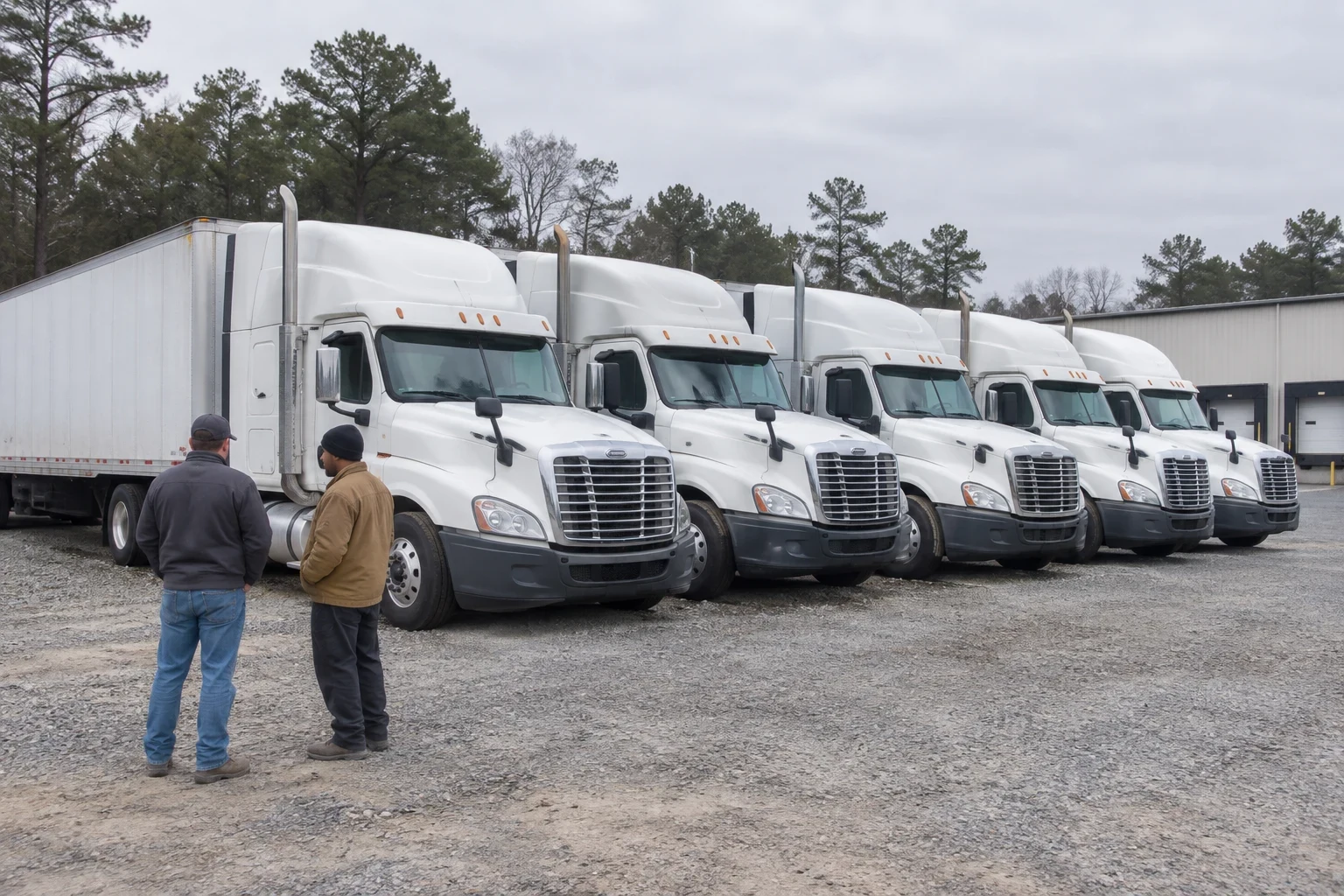
One policy for the whole operation, maintained over time
Fleet truck insurance gathers your power units, trailers and drivers into a single coordinated program rather than a pile of policies with different carriers and dates. Primary auto liability, physical damage, motor truck cargo and the other pieces sit together, so everything renews at once and your filings all point back to the same DOT number and MC authority.
The setup is only the start. Fleets change constantly: a tractor gets sold, a driver leaves, a new account calls for higher cargo limits. A policy that is not updated drifts away from your operation, and that gap usually shows up at the worst moment, during a claim or an audit. We treat the policy as something to look after, the way you look after your trucks between inspections.
We work with motor carriers from Lawrenceville and nearby towns such as Duluth, Suwanee and Snellville, at our office or by phone and video.
What we handle on a fleet policy
- Unit schedule with accurate values
- Every tractor, straight truck and trailer is listed by VIN with a stated value that reflects what it would cost to replace. Values that were right three years ago are often wrong now, so we revisit them.
- Driver list and MVR review
- Carriers underwrite your drivers as much as your equipment. We keep the list current and flag a driver whose record could affect your premium before an underwriter finds it.
- Coverage built from the right parts
- Liability, physical damage, cargo coverage and trailer interchange are sized to your freight, your radius and your contracts. If you lease on owner-operators, we look at whether they carry non-trucking liability.
- Filings and certificates
- We keep federal and state filings in order and issue certificates of insurance to shippers, brokers and job sites as you need them.
- Mid-term changes
- Adding a unit, dropping a truck you sold or changing a garaging location is handled when it happens. That way the premium tracks the equipment you really run, and a newly bought truck is on the schedule before it hauls its first load.
Signs your fleet coverage needs attention
Each truck sits on its own policy
Different renewal dates and carriers make it easy for a unit to lapse unnoticed. Consolidating often makes the program easier to manage.
Your schedule lists equipment you sold
If a traded-in tractor is still on the policy, you are likely paying for it. If the replacement is missing, it may not be covered.
A new contract asks for different limits
Brokers and shippers sometimes require higher cargo or liability limits, or specific endorsements. Those requests deserve a careful look, not a rushed certificate.
Renewal arrived with a large increase and no explanation
Premium moves for reasons: loss history, driver changes, unit values or the market. You should know which ones apply to you.
You have grown past what the old policy was written for
A program set up for three trucks often fits poorly at eight. Radius, commodities and driver count may all have changed.
How we set up and look after a fleet program
- 1
A conversation about your operation
We start with a call or a meeting at our office. We want to hear about the freight you move, your usual lanes, the trucks and drivers on your roster, and any limits your contracts spell out.
- 2
Gathering the details
We collect your unit list with VINs and values, your driver list, your DOT number and recent loss runs. Clean, complete information gives underwriters fewer reasons to price cautiously.
- 3
Comparing options line by line
We take your fleet to the market and walk you through the options: limits, deductibles, exclusions and what each premium buys. You decide with the full picture in front of you.
- 4
Putting coverage in force
After you pick an option, we bind the policy and check that each required filing has gone through. Certificates of insurance then go out to the brokers, shippers and job sites that ask for them.
- 5
Upkeep through the year and before renewal
We handle changes as they come up and start the renewal review well ahead of the expiration date, so there is time to adjust instead of reacting.

How a fleet premium is priced
Underwriters weigh a long list of inputs when they price a fleet, and most of them are things you can watch and improve over time. We show you which ones carry the most weight for your operation. A policy that has been kept accurate, paired with a steady safety record, tends to count in your favor at renewal.
- Loss history
- Carriers look back over several years of claims. How often claims happen often matters as much as how large they were.
- Driver records and experience
- Each driver's MVR, years behind the wheel and time with your company feed into the rate. One driver with recent violations can lift the cost for the whole program.
- Number and value of units
- More power units and trailers mean more exposure, and higher stated values raise the physical damage portion. Keeping values current keeps that line honest in both directions.
- Freight and radius
- What you haul and how far you run change the risk. Long-haul routes, high-value loads or hazardous commodities are priced differently from local, short-radius work.
- Limits and deductibles you choose
- Higher liability or cargo limits cost more, and a larger deductible usually lowers premium. We help you weigh what your contracts require against what you can comfortably carry yourself.
Fleet truck insurance questions
Something not covered here? (770) 203-1136
How many trucks do I need before it counts as a fleet?
There is no single number. Each carrier sets its own threshold, and some start rating an operation as a fleet once it runs a handful of power units. What changes more is the upkeep. With several trucks and drivers, one coordinated program is usually simpler to keep accurate than a set of separate policies.
I just bought another tractor. How do I get it covered before it runs?
Call us with the VIN, the purchase value and the driver assigned to it, and we update the schedule with the carrier. The premium is prorated for whatever remains of the term. It is far better to reach us before the truck takes its first load than after.
What happens when a driver leaves or a new one starts?
Call us when a driver leaves and we take them off the list. When you hire, call with the new driver's details and we pass them to the carrier for approval. Some carriers review a driver's record before accepting them, so a heads-up early in hiring helps.
Can owner-operators leased to my company be on my policy?
Your liability typically covers them while they are under dispatch for you. They usually still need their own physical damage and non-trucking liability. We can go over your lease arrangement and point out any gaps.
Why did my renewal go up when we had no claims?
Claims are only one factor. Driver changes, higher unit values, a shift in freight or radius, and broader market conditions can all raise premium. We go through the renewal with you line by line and show which factors moved.

Keep your fleet coverage in step with your trucks
If you are pulling separate policies together or getting ready for renewal, we will look over what you carry and what has changed since it was written. Have your unit list and driver list handy when you call, and we will take it from there.